

Small Space Design: Can It Really Feel Bigger?
Learn expert tips to make your small home feel spacious with decluttering, multi-use furniture, vertical storage, and strategic decor.

Prefer to listen instead?
- 61% of Americans feel their homes are too small. This shows a need for better small space design.
- Paint and lighting can make a home sell for up to 10% more.
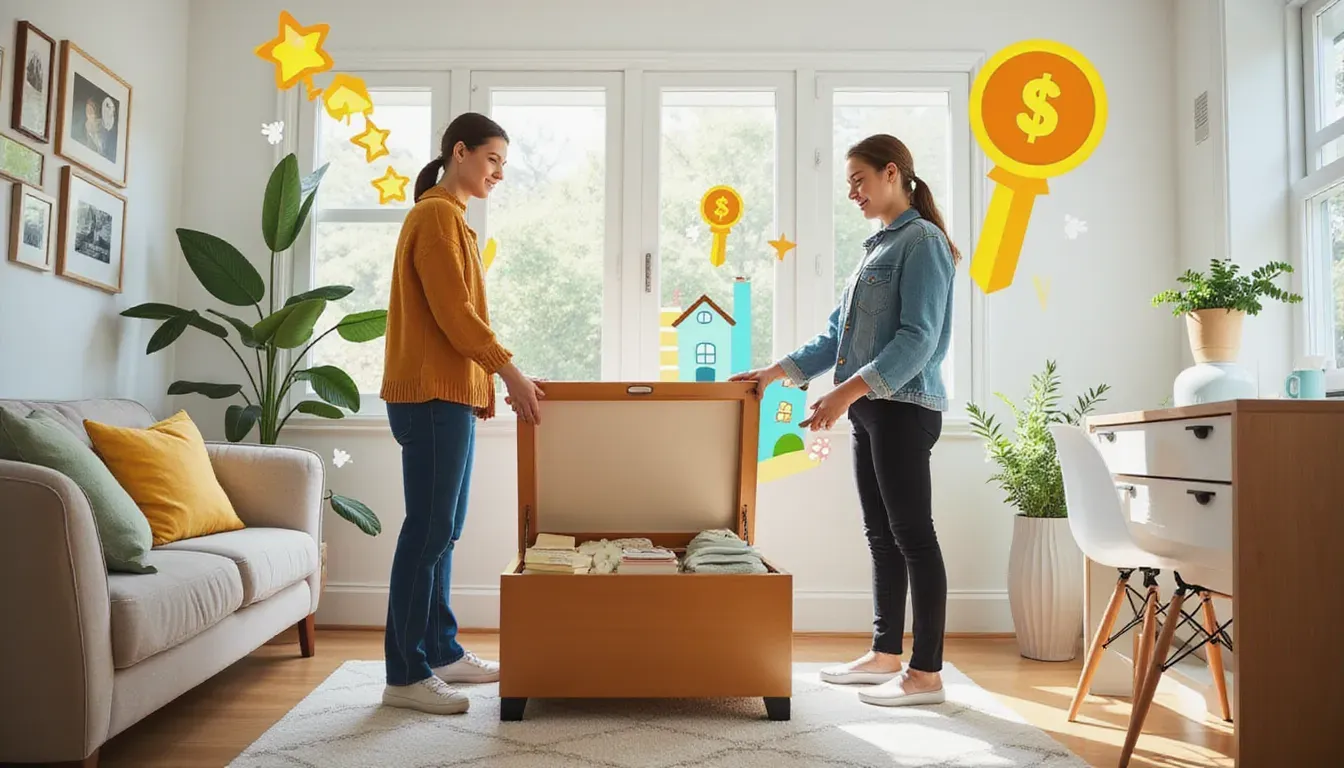
- Furniture that serves many purposes can make a small room much more usable without taking up extra space.
- Light colors and natural light make a small room seem bigger.
- Preparing small homes for specific purposes makes them more attractive to buyers and makes them seem bigger.
Small Space Design: Can It Really Feel Bigger?
More people live in cities or choose simple lives. So, smaller homes are common now. In fact, 61% of Americans say their homes feel too small. But smart design can make even the smallest space feel bigger. If you live in a small space, are buying one, or getting ready to sell, a few simple changes can greatly change how a space feels. And they can also make it more appealing to buyers.
1. Decluttering: The First Step Toward Visual Peace
Making a small home feel bigger starts with decluttering. Too much stuff makes things feel messy. It makes rooms cramped and not welcoming. Make a space with clean lines, open floors, and empty surfaces. This will make your space feel larger.
Here are some tips to organize your small home:
- “One in, one out” rule: For every new item, get rid of an old one. This keeps you from gathering too much stuff.
- Store smart: Use under-bed storage, vacuum-sealed bags for off-season clothing, or rent off-site storage units for rarely used items like holiday décor or sports gear.
- Getting ready to sell? Decluttering makes buyers think better of your home. A tidy home looks larger, is taken care of better, and is worth more.
When you clear clutter, your home feels well-thought-out. This shows that small space design is about quality, not how much you have.
2. Multi-Use Furniture That Doubles Down on Space
To get the most from your space, every piece of furniture should serve two or three purposes. Furniture with many uses is key for small home design. It helps you cut down on clutter and get rid of furniture that only does one thing.
| Traditional Item | Space-Saving Alternative |
|---|---|
| Standard coffee table | Lift-top coffee table with storage |
| Full-size guest bed | Murphy bed, daybed, or sofa bed |
| Bulky desk | Wall-mounted drop-leaf desk or console |
| Dresser | Storage ottoman or under-bed drawers |
| Bookshelf | Floating shelves or ladder-style rack |
Other good options:
- Expandable dining tables: Seats 2 to 6, depending on need.
- Bench seating with hidden storage: Ideal for entryways or dining nooks.
- Side tables with charging ports: Fewer cords, more functionality.
Smart furniture like this makes living small not just possible, but very comfortable. You’re not giving up; you’re trading up for smarter, sleeker solutions.
3. Vertical Storage: Think Up, Not Out
When you have little floor space, look up. Vertical storage uses your room’s height. It keeps more of your floor open, making the room feel much larger.
Here are ways to best use vertical space:
- Floor-to-ceiling shelves let you store more without taking up more floor space.
- Overhead racks in kitchens and garages hold pans, bikes, and gear without crowding your walkways.
- Above-door shelving adds surprise storage and visual charm.
- Wall-mounted pegboards organize everything from kitchen utensils to office supplies while adding visual interest.
- Over-the-toilet shelving units are perfect for small bathrooms.
Vertical storage is a great way to clear surfaces and make the space seem longer. They make things orderly. This makes even the smallest rooms feel manageable and even spacious.
4. Smart Layouts and Room Zoning
Good layouts are key to making rooms easy to move through. Small homes often feature open layouts or make one room do the job of many. But without careful planning, this can create a messy look and make things hard to use.
Dividing your space into zones makes things clear and orderly. Here’s how:
- Rugs show different areas: Use different textures or colors to separate living and dining spaces.
- Where you put furniture shows what each area is for: Move your couch away from the wall to separate areas.
- Keep walkways open: You need at least 30 inches for walking paths to make sure you can move around easily.
- Divide areas on purpose: Use bookshelves, curtains, or folding screens to create separate areas like home offices or small workout areas.
Zoning methods are not about walls. They are about signals. They help each area have its own purpose, making the whole home feel larger and more useful.
5. Lighter Colors and Lighting Tricks
How colors affect us and lighting are two of the most powerful tools in small space design. If done right, they can make your room look much bigger.
Recommended paint schemes:
- Whites and off-whites: Reflect the most light. Best for dark corners or windowless rooms.
- Soft cool tones: Light blues, grays, and greens make things seem farther away. This makes rooms feel airy.
- Use one main color with different textures: This keeps the design unified without being boring.
Lighting tips to make rooms glow:
- Use mirrors in smart spots: Put mirrors across from windows to double natural light.
- Layer your lights: Mix overhead lights, task lights (like desk lamps), and accent lights (LED strips, sconces) to make the room brighter in different ways.
- Choose slender, see-through light fixtures: Do not use bulky lamp bases or dark lampshades.
Done right, these small design changes bring light and freshness into every corner of your home.
6. Window Treatments: Let the Light Pour In
Natural light is every small space’s best friend. But the wrong window treatments can block light completely or make the room seem shorter.
Follow these expert guidelines:
- Use sheer curtains or solar shades: These let in the most light while giving you privacy.
- Mount rods 6–12 inches above the window frame: This makes ceilings seem taller.
- Extend the curtain rod beyond the window’s edge: This makes windows seem larger and lets in all the light when open.
- Avoid heavy fabrics or dark colors: They absorb light and add a heavy look.
Think of windows as chances to make a room better. Get the most out of them with simple, well-chosen coverings.
7. Strategic Decor and Minimalism: Less Is (Visually) More
When every inch counts, your décor must fit well with the space, not fight it.
Best ways to decorate small spaces:
- Use large, statement pieces rarely: One large art piece or vase can make a statement without creating clutter.
- Stick to a limited color palette: Too many colors break up the space. One main tone with matching accents makes things flow together.
- Go for open or floaty furniture styles: Think hairpin legs, transparent materials, or wall-hung designs.
- Use texture over pattern: Knit throws, woven baskets, and wood grains create visual interest without chaos.
Minimalism is not about bare rooms. It is about choosing a thoughtful way of living where every item makes things both useful and pleasant.
Bonus: Staging Tips for Sellers of Small Homes
Selling a small home doesn’t have to be a disadvantage. Good staging can show the good things about comfortable living. It also makes the space seem larger and fresh.
Buyers respond well to:
- Clear room uses: Do not make rooms serve three purposes. If a room is an office, guest room, and gym, pick one role and decorate for that role.
- Light and neutral tones: As we said before, light colors make rooms feel more open and airy.
- Simplicity: Remove personal items, extra furniture, and distracting patterns.
- Areas that can be used for different things: Use alcoves or corners as reading spaces, small offices, or quiet areas.
Keep this in mind: Buying a home is emotional. Your goal is to make people feel hope and openness.
Design Tricks That Add Dollar Value When Selling
Small cosmetic changes can bring good money back. This is true for small spaces where buyers look closely at every detail.
| Upgrade Type | Avg. Cost | Potential Boost in Sale Price |
|---|---|---|
| Repaint walls | $500 | +$2,500 |
| New light fixtures | $300 | +$1,500 |
| Decluttering/stage | $0–$300 | +$3,000 |
Focus on projects that make the home feel newer, brighter, and less cramped. These simple upgrades that pay off well show how good small space design is not just good-looking, but also profitable.
When Buying Small: How Our Buyer Rebate Can Help
Many first-time homebuyers or people moving to smaller homes choose them for cost and practicality. And if you are buying smaller to save money, why not get even more back?
We offer a commission rebate—cash in your pocket at closing.
- Use rebate on: New furniture, built-in storage, or upgraded appliances
- Many uses: Pay down the mortgage, cover moving costs, or change your space
- Simple process: Rebate is calculated based on purchase price and commission sharing
Smart buying doesn’t stop at the list price. Let us help you stretch your budget even further.
Selling Smart: Maximize Small-Space Appeal and Cut Commission Costs
Worried that a modest-size home means modest profits? With our full-service 1% listing plan (min. $3,000), you can sell smart. You will not give up good service or sharp marketing.
Here’s what’s included:
- Expert valuation to suit your price goals
- Professional photos that show off light, how easy it is to move around, and height
- Smart advice for staging to make every area shine
- Marketing directly aimed at city and starter-home buyers
You’ve created a beautiful, efficient space—now let it shine and put that effort toward your equity.
Talk to an expert now — Your free, no-pressure chat is just one click away.
Final Thoughts: Big Design. Bigger Savings.
Small space living is both a challenge and an opportunity. With the right approach (well-planned layouts, smart upgrades, and simple, chosen décor), you can make any small home feel much larger, brighter, and more useful. And if you are buying, selling, or staying put, great design is an investment that pays off in how useful it is, how good it looks, and how much it sells for later.
With our tools and ways to save, you can truly use small space design without giving anything up. And you will make things look better and save money along the way.
Let us get the most from every square inch, together.
Citations
Stanley, J. (2023). Survey: 61% of Americans Say Their Homes Feel Too Small. Real Simple.
HomeLight. (2023). Top Home Upgrades That Give the Best ROI When Selling. HomeLight.
About the author
Related articles
Appraisal vs. CMA vs. Online Estimate: Which Home Value to Trust
Appraisals, CMAs, and online estimates measure home value in different ways and for different purposes. Learn how each is produced, why the numbers disagree, and which one to trust for pricing, buying, or refinancing.
Is a Fixer-Upper Worth It? How to Run the Numbers
A fixer-upper pays off only when the purchase price plus renovation, financing, and carrying costs lands well below the finished home's value — with margin to spare. Here's the worksheet and the formula to run the numbers.
Should You Renovate Before Selling? A Decision Framework
Renovating before you sell rarely turns a profit on the work itself. Use this decision framework to weigh condition, competition, timeline, and cash — and know when selling as-is is the smarter move.

Home Equity: How Much Is Really Yours?
What is home equity and how can you leverage it in 2026? Discover how to calculate, grow, and wisely use your home's equity.