

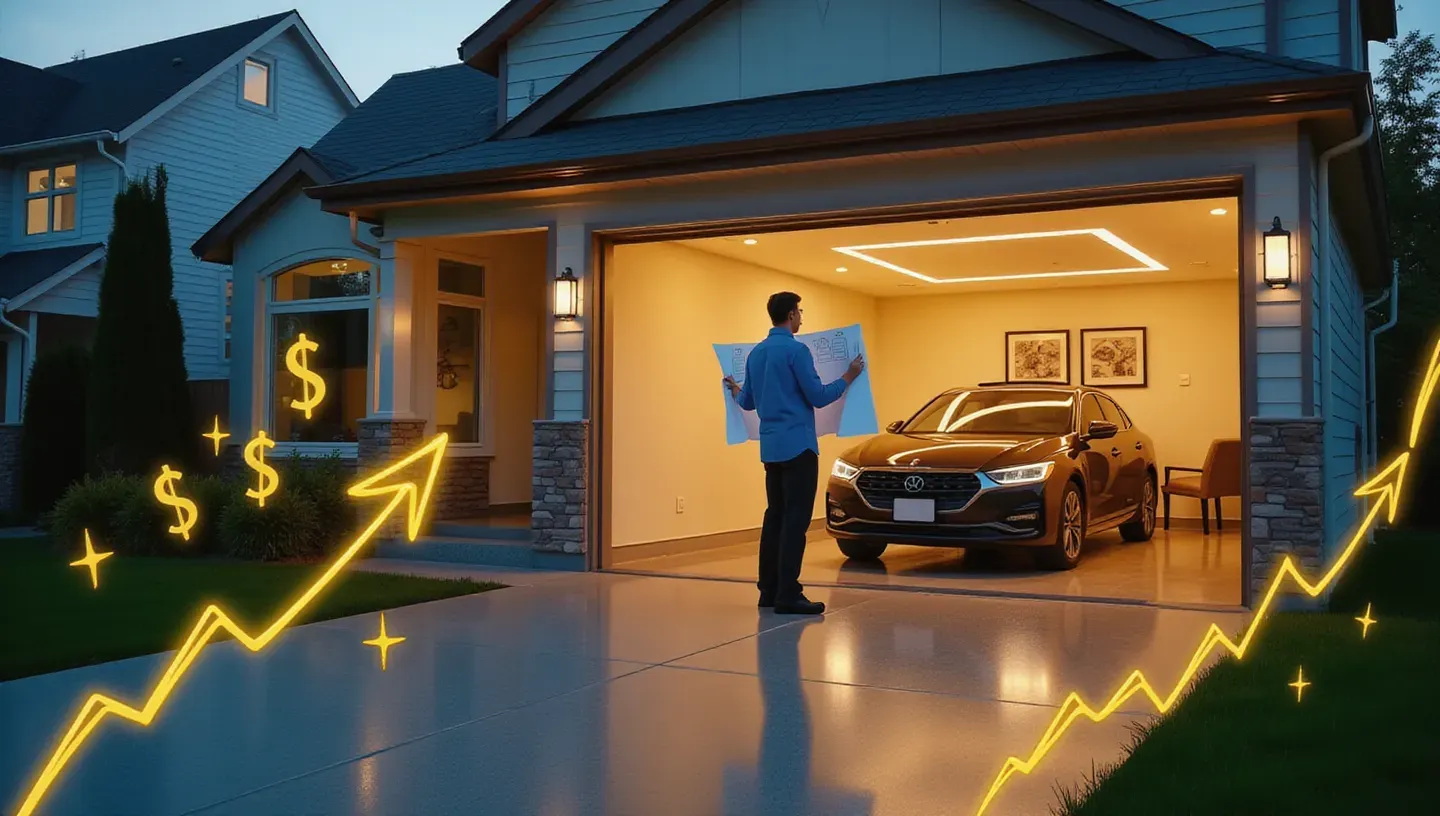
Garage Value: Does It Really Increase Home Price?
Find out how much value a garage adds to a house and whether the ROI makes it a smart home upgrade. Learn the cost, benefits, and buyer preferences.

Prefer to listen instead?
- Homes with garages sell for $23,211 more on average.
- Garage additions recoup 60%-80% of their cost at resale.
- Over 60% of homebuyers consider a 2-car garage essential.
- Garage door replacement offers over 100% ROI—strongest in remodeling.
- Garage ROI varies significantly by region, weather, and local buyer habits.
Garages can be both practical and profitable. But just how much do they really add to your home’s value? In a time when building costs are going up and renovations need to show their worth, adding or upgrading a garage deserves a clear look. This guide looks at real garage value, what buyers expect, and if the return on investment (ROI) is worth it for sellers who want to increase resale value before listing.
Average Cost to Build or Add a Garage (2025)
When you think about adding a garage, you need to know the cost. Garage prices change based on several things, like materials, how complex the design is, local labor costs, rules in the area, and utility connections. Below are the national averages reported for different types of garages in 2025:
| Garage Type | Average Cost (US) | Common Range |
|---|---|---|
| Detached 1-Car | $27,000 | $18,000–$35,000 |
| Attached 2-Car | $35,000 | $25,000–$45,000 |
| Detached 2-Car (custom) | $52,000 | $40,000–$70,000 |
Other things that add to the cost are:
- Foundation work: This is needed for detached garages and makes the cost higher.
- Permits & zoning: Local governments might charge fees and have limits.
- Utilities: Electrical, water, and HVAC connections can add up.
- Finishes: Things like drywall, insulation, garage doors, and floor coatings can make the final price much higher.
Always talk to a local builder or contractor for better cost estimates for your area.
Garage ROI: Return on Investment by the Numbers
Garages can make your home more useful and appealing. But you need to look at how much money you might get back. ROI shows how much of your investment you get back when you sell.
The 2024 Cost vs. Value Report by Remodeling Magazine says that adding a garage usually gives an average ROI of 60% to 80%. This means if you spend $35,000 on a new attached garage, your home’s value might go up by $21,000 to $28,000, depending on the market.
Highlight: A separate NAHB report found that homes with garages sell for $23,211 more than similar homes without a garage (NAHB, 2024).
But this does not mean you will always make money. Adding a garage won’t break even in every market. Homeowners should always compare the cost to what they expect to get back. They can do this by looking at similar homes sold nearby and what buyers in the area want. Big things that affect garage value are:
- Who is buying (families versus single people)
- City versus suburban areas
- Weather
- How many similar homes are for sale now
Attached vs. Detached: Which Adds More Value?
When you plan to add a garage, one of the first things to decide is if it should be attached or detached. Both choices affect cost, how useful it is, and what buyers want.
Attached Garage Advantages:
- Costs less: It shares at least one wall with the house, which cuts down on material and labor costs.
- Easy to get to: You can get to it from inside the house. This is good in cold or rainy weather.
- Easier utility connections: It is simpler and cheaper to connect power, heat, or plumbing from the house.
Detached Garage Advantages:
- Flexible design: You can build it anywhere on the property. This works well for lots that are not a regular shape.
- More ways to use it: It is quieter and private. This makes it good for a home office, guest room, or gym.
- Looks good: It can make the main house look less bulky. A well-planned design can also improve the home’s curb appeal.
Neighborhood Tip: Match what is common in your area. If most homes nearby have attached garages, doing something different might make your home less wanted and reduce its resale value.
One-Car vs. Two-Car Garage: Does Size Matter?
Yes, size really matters for how much a garage adds to your home’s value. Most buyers today think a one-car garage is too small, especially in suburbs or family areas.
A recent NAHB report found that:
- Over 60% of recent homebuyers considered a two-car garage essential.
- More than 80% preferred two or more car spaces, regardless of household size.
Two-Car Garage Benefits:
- Safer place to keep cars for more than one driver.
- Extra storage for things like lawn equipment, bikes, and sports gear.
- Can be used in different ways, like a workshop, gym, or hobby space.
If you cannot build a two-car garage because of space or rules, make sure your one-car garage has smart storage and good finishes. This will make buyers see more value in it.
Weather, Region & Market Preferences Matter
How much a garage adds to a home’s value depends a lot on the weather in your area and what local buyers like. For example:
- Cold-Winter States (e.g., MN, IL, NY): Attached garages are preferred to avoid exposure during snow or storms.
- Suburban Family Neighborhoods: Two- or three-car garages are often expected. And not having them could be a red flag.
- Urban Markets (e.g., San Francisco, Boston): Street parking is hard to find, so any enclosed space, even a one-car garage, can raise property value.
- Sunbelt States: Detached garages may be favored. This is because of ventilation, detached offices, or converting them into guest houses.
Hot Tip: Look at similar home sales in your area. If people are turning detached garages into extra living units or workspaces, you might need to change your ROI plan to focus on using the space for many things.
Buyers’ Price Sensitivity & Garage Expectations
Today, buyers see garages as more than just a place for cars; they are rooms that can be used for many things. The Zillow Housing Trends Report (2024) says about 85% of buyers feel a garage is “somewhat” to “very” important.
Their key expectations include:
- Safe storage: For things not used often, tools, or large items.
- Can change later: It can hold electric vehicle chargers or solar panel battery storage.
- Good for how people live: Home gyms, craft areas, and pet washing stations are more and more common garage uses.
Modern Buyer Mindset: “I want my garage to feel like a usable, organized extension of the house—not a dusty storage box.”
Conversions: Garage to Living Space (Risky ROI?)
Changing your garage into living space—like a guest room, extra room, or Airbnb rental—might seem like a good idea in expensive cities. But there are downsides.
Potential Benefits:
- Adds living space in states with high $/sq ft price tags.
- Works for families with many generations living together or for making income.
Major Downsides:
- Can lower home value in suburban areas or places where people rely on cars.
- Might go against zoning rules or make it harder to get certain appraisals.
- Changes a common “must-have” into something not everyone wants.
Be careful: In suburban areas, buyers might offer less for a garage that is now a bedroom. This is because there is no place to park cars, or because of extra insurance worries.
Should You Add a Garage Before Selling?
Not always. Here is a chart to help you decide if building a garage before you sell is a good idea:
| Situation | Recommended Route |
|---|---|
| Your home lacks a garage and similar homes have 2-car | Add a garage before listing |
| You have a 1-car garage in an area where 2-car garages are common | Look into other options that don’t involve building; improve finishes instead |
| Detached garage in an area where most are attached | Show how useful it is, add landscaping or change its design |
| Listing home in |
Alternatives to Full Garage Addition
If adding a full garage is not possible because of cost, time, or building issues, think about smaller projects. These can still raise garage value and improve home improvement ROI:
Smart, High-ROI Alternatives:
- Garage Door Replacement: Average ROI over 102%—one of the most cost-effective renovations (Remodeling Magazine, 2024).
- Floor Refinishing: Epoxy sealants create a polished, strong floor.
- Built-in Storage: Adds usefulness with racks, cabinets, and workbenches.
- Tech Upgrades: Install smart door openers, cameras, or EV charger wiring.
These improvements can impress buyers, make listing photos better, and help justify a higher asking price.
Calculate ROI with Your Local Market in Mind
No two markets are alike. Before you put money into adding a garage, make your predictions using very local data. Gather information like:
- How long homes with garages stay on the market compared to those without.
- Is the price per square foot higher for homes with garages?
- Are trends showing a change from attached garages to flexible or mixed types?
Think about using real estate tools or working with agents who offer local comparisons and future predictions to truly understand garage ROI.
Consult with Real Estate Pros Before Building
Don’t start building before you talk to experts. A local agent with experience can help you:
- Look at similar homes and pricing in your zip code.
- Understand what buyers expect and prefer for garages.
- Choose the best next steps based on your home’s state and your timeline.
Getting a professional opinion can save you tens of thousands in mistimed or unneeded renovations.
Case Study: $600K Listing in Austin, TX
Here is an example.
| Scenario | Without Garage | With 2-Car Garage |
|---|---|---|
| Sale Price | $577,000 | $600,000 |
| Cost to Add Garage | — | $32,000 |
| Net Proceeds (after cost) | $577,000 | $568,000 |
The garage raised the list price, but it lowered the net profit by $9,000. How fast the market is, the timing, and how much buyers want something all affect if adding a garage is worth the work before selling.
Sell for More, Pay Less with Our 1% Listing Service
Instead of spending too much on expensive projects right before selling, get the most out of your earnings by keeping fees low.
| Sale Price | Traditional 3% Fee | Our 1% Fee | Your Savings |
|---|---|---|---|
| $500,000 | $15,000 | $5,000 | $10,000 |
| $750,000 | $22,500 | $7,500 | $15,000 |
Use those savings for smart projects before listing that have a proven ROI, such as replacing the garage door or adding epoxy floor coatings.
Think Strategically About Garage ROI
A garage can definitely add value. But this only happens if it matches what buyers need, what is common in the neighborhood, and your timeline. Before you start building:
- Look at what is normal in your neighborhood and compare it to similar homes.
- Look into cheaper upgrades first.
- Talk to local real estate experts.
If you are flipping a house, moving to a bigger one, or just making improvements, good planning helps make sure your garage project pays off. You get both a useful space and more money when you sell.
Talk to an expert now — Your free, no-pressure chat is just one click away.
Citations
- HomeAdvisor. (2024). Garage Building Cost Guide. https://www.homeadvisor.com/cost/garages/build-a-garage/
- National Association of Home Builders. (2023). What Home Buyers Really Want. https://www.nahb.org/news-and-economics/housing-economics/
- Remodeling Magazine. (2023). Cost vs. Value Report. https://www.remodeling.hw.net/cost-vs-value/2023/
About the author
Related articles

Buy Before You Sell vs Sell Before You Buy: How to Decide
Buy before you sell or sell before you buy? Selling first is usually the financially safer choice, but buying first is more convenient. Use this framework — plus bridge loans, HELOCs, contingencies, and rent-backs — to decide.
What Does Buying a Home As-Is Really Mean?
Buying a home as-is usually means the seller won't make repairs — not that you lose the right to inspect or to walk away. Here's what your contract and state law actually control.

Buying a Home at Auction: Cash, Financing, and Risks
How real-estate auctions work, whether you can finance an auction purchase, and the risks of buying with no inspection — foreclosure, tax, REO, and HUD sales compared, with a pre-bid due-diligence checklist.

Buying a Short Sale: Process, Timeline, and Pitfalls
How buying a short-sale home works, why lender approval takes so long, and the timeline, costs, and legal pitfalls buyers should plan for.